
A Credit Card Rating System Introduction (Series Part 1 – June 2019)
A CREDIT CARD RATING SYSTEM
The responsible use of cash reward credit cards has been very helpful in reducing my monthly expenses. In order to help me decide what new credit card I should apply for at any given time, I have developed a credit card rating system. It guides me in determining which credit card will best meet my needs at the time I apply for it. This blog post series will explain my system in detail to help others decide what cards and card qualities to consider as well.
THE CATEGORIES OF CREDIT CARDS
The categories of credit cards are shown in the illustration below. Note that each serves a different purpose. Cash reward credit cards provide a crucial feature that some of us value most, cash back for a reduction in expenses. To apply the system where it has great value, I will use the cash back or cash rewards cards category as the primary focus of this blog post series, A CREDIT CARD RATING SYSTEM.

CASH BACK AKA CASH REWARDS CREDIT CARDS
With cash back credit cards, one can get reductions in monthly credit card charges. This is crucial for the survival of someone who is a Former Middle-Class Person as well as a senior citizen. In fact, the benefits offered to make life easier with these cards increases almost daily. This is because credit card issuers are becoming increasingly competitive with generous offers to lure new customers to switch credit cards.
ADD TO RATHER THAN SWITCH CARDS
It can be preferable to add a new credit card rather than switch by elimination. On the other hand, there are many details to keep in mind when adding rather than switching. In spite of that, one major benefit of having a bounty of (cash reward) credit cards is a substantial amount of total available credit. This means that if a credit cardholder uses a very small % of his/her total available credit each month, a major factor of one’s credit score remains ‘EXCELLENT’. When it comes to credit scores, most systems use a total of six factors and using a small % of available credit is one of them. But adding new cards definitely has its pluses and minuses. In spite of the challenges, I have found adding cards to be a plus. More about this in the other posts in this series.Here is an article about this from Credit Karma.

HOW TO KEEP MANY CASH BACK CREDIT CARDS ACTIVE AND IN ORDER
There is no way to use every card each month. As a result, I use a rotation/pairing system that allows me to use only several cards each month. The pairing part means that I make available one card in each of my charging categories, if possible. Even though I have developed a system, I still have to be vigilant. That means staying within my spending budget and making all my payments on time. In other words, there needs to be a way that I can keep track of every detail of every card at all times. More about that in the other posts.
MY CREDIT CARD RATING SYSTEM AS IT IS APPLIED TO CASH BACK CREDIT CARDS
The additional posts in this series will focus on how my credit card rating system relates to how I choose cash rewards credit cards. I can and do use it for deciding on all my accounts. The beauty of this system is that it can be used across the board with any cash reward card. In fact, it can be used for deciding on any type of credit card as well.
SUMMARY
Here are the links to this five part series about my Credit Card Rating System: Introduction to A Credit Card Rating System
The Rating System Used for Cash Back Credit Cards (Series Part 2 – June 2019)
Excellent Cash Reward Cards (Part 3 – June 2019)
Mixed Cash Reward Credit Card Benefits (Part 4 – June 2019)
Risky Cash Reward Credit Cards (Part 5-June 2019)
Please note: I am not a certified financial planner or professional advisor. These blog posts about the use of credit cards are based on my own experience which I freely share. But I can take no legal or financial responsibility for the results you may have in attempting to follow my system. But I do wish you the best and welcome your comments and questions at the VERY end of this post. You will have reached the end because you can not scroll down any further. As well, you will have reached the comment form.
SOURCES & RESOURCES
To learn more about credit card cash rewards, go to these blog posts:
Credit Card Categories, Sign Up Incentives and Cash Rewards
How To Compound Cash Rewards
Nerd Wallet | Credit Cards Market Place
The Former Middle Class Ebook Series
The learn more about all kinds of credit cards, go to following link about CompareCards.com (A.) and its sublinks (B. through I.)
A. CompareCards® by Lending Tree
B. Best Credit Card Offers July 2019
C. Low Interest Cards
D. Balance Transfer Cards
E. Cash Back Cards
F. Reward Cards
G. Airline Cards
H. Business Cards
I. No Annual Fee Cards
Share this:

Credit Card Categories, Sign Up Incentives and Cash Rewards
There are numerous credit card categories and signup incentives available. For example, some credit cards offer hefty signup bonuses. Others have top cash rewards. Then there are travel points. Finally, there is balance pay down cards. You just have to know what you need, go over the details, see what you qualify for, and apply for the best card in that category. Because there is so much to cover, this blog post will focus only on one time sign up cash incentives and ongoing cash rewards.
Credit Card Sign Up Incentives and Ongoing Cash Reward
There are basically two ways that credit card companies entice new customers seeking cash rewards as their priority. First, there is a single signup cash back bonus. This is accomplished by offering a set amount of money to be charged on a new credit card within a given amount of time. In addition or instead, there can be ongoing cash rewards.
Bank of America® VISA or MC Cash Rewards Card
This particular card is a very good deal all around. It offers a number of excellent credit card signup incentives. In fact, it is ideal for someone seeking a credit card with cash rewards:

• $150 cash reward bonus
• cash back on every purchase, every time
• no annual fee†
• your choice of a 3% cash back category, 2% and 1% categories

Comparing Credit Card Offers
Spending Profile
Let’s compare the Bank of America VISA Cash Rewards Card with some of my other favorites. In fact, I have several other favorites. Determining which are the best cards or even single card depends on a person’s credit card charging needs or spending profile, as I like to call it. For example, I always aim to get the maximum cash back on every purchase I make. Therefore, when I signup for a card, I like to make sure it fits into my spending profile. For example, these are my major credit card charging categories:
• GROCERIES
• DINING (EATING OUT)
• UTILITIES
• GAS
• HEALTHCARE
• HOME AND PERSONAL PURCHASES
GROCERIES: The Amex Blue Cash Everyday® Card
Here is how my system works. For example, the American Express Blue Everyday card offers 3% cash back so that is my card of choice for groceries. It has a similar profile to the Bank of America® card with a few differences.

• $150 or $200 cash reward bonus
• cash back on every purchase, every time
• no annual fee†
• 3% cash back on groceries
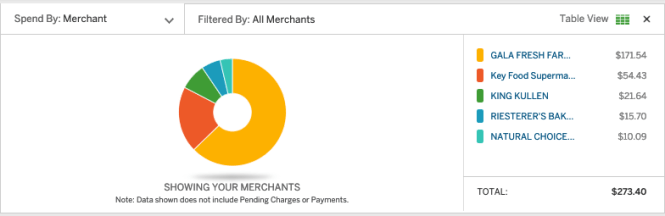
Numerous credit card accounts provide charts like the this one to provide of breakdown of categories of expenses or vendors within a particular category.
DINING OR EATING OUT: Capital One® SAVOR Card
This card offers 4% for dining out. It even includes McDonald’s, Burger King, Dunkin Donuts, etc. .
The chart below compares values of dining out cards. The Savor Card is close to the highest and charges less than others with higher or similar % bonuses.

UTILITIES: The New Credit Card Sign Up Sweet Spot
This is how I break in a new credit card to receive their one time sign up bonus. If I use it to charge my monthly utility bills such as cable, cell phone, and contents insurance, I charge about $275 a month on it. That easily covers a requirement of $500. in charges in two months. A requirement of $1000 in charges in three months can also be covered with a few extra charges are added in. I have fulfilled the requirements of a number of very useful cards with this method. In addition, I also get monthly cash rewards this way because I use the new card for charges and pay it the following month from my checking account. This technique is a real winner if I can remember which month I am supposed to do what task.

GAS: Get 3% With the New ‘Choose Your Category’ from Bank of America®
Because Bank of America® Cash Rewards Cards now offers the option of choosing 3% on their new ‘Choose Your Category’ plan, we use it to pay for gas. That is the best cash back rate I have found to date for gas.

HEALTHCARE AND BEAUTY: The CareCredit® Rewards Master Card
The CareCredit® Rewards Master Card pays 2% on health related and other charges that the above and below cards do not cover for more than 1% or 1.5%

*Subject to credit approval.” Quoted from CareCredit® Card’s application material.

CAPITAL ONE® QUICKSILVER CARD: For Everything Else


HOME and PERSONAL PURCHASES

MORE HOME and PERSONAL PURCHASES
TJ Maxx which includes Home Goods, Marshalls and Sierra have special promos that can triple their usual ratio of points for each dollar spent. On the other hand, Home Depot has a $25 signup bonus which is deducted from the first purchase only. There is no cash reward bonus for their card.

A WINNING HAND
As a result of careful planning, almost every charged purchase can earn a cash reward of between 1.5 % TO 5%. One exception is HOME DEPOT. They don’t offer cash rewards. So, from maximum to minimum, this is what a winning hand of credit card cash rewards might look like.
HOME, OFFICE AND PERSONAL: 5% Staples, Target*
DINING AND EAT OUT: includes McDonald’s, Burger King, Dunkin Donuts, etc. 4% Capital One® SAVOR Card
GROCERIES: 3% American Express® Blue Everyday Cash Rewards
GAS: Choose 3% on the new BoA ‘choose your category’ plan
HEALTH-RELATED, PET AND SOME BEAUTY: 2% CareCredit® Rewards MC 2%
EVERYTHING ELSE: 1.5% Capital One® Quicksilver card
*Special offers triple points at certain times of the year
Keeping Track of A Winning Hand
Jim Wang of Wallet Hacks has the best trick I’ve heard of to remember which card offers what. Write it directly on the card. For example, on the Capital One® Savor Card write, ‘DINING 4%’. Just one word to describe the category and the % reward. It works very well when you have three, four, or even five cards in your wallet.
SOURCES & RESOURCES
Wallet Hacks
Target
Staples
TJx Credit Cards
Capital One® Savor Card
Capital One® Quicksilver Card
American Express® Blue Cash Everyday Card
Bank of America® Cash Reward Cards
CareCredit® Rewards Card
Share this:

Confessions of a Survey Junkie®
How I Became A Survey Junkie®
You may wonder, ‘how does one become a survey junkie’? How I became a ‘survey junkie’ is something I ask myself from time to time. Let me go back to explain how it happened.

The Poor Middle Class Crisis
Back in 2009, when we became One Day from Homeless, our finances and our lives changed completely. We went from being part of the gainfully employed middle class to part of The Poor Middle Class Crisis.
In our new Former Middle-Class Life, our weekly salaries and monthly investment incomes no longer existed. Instead, they were replaced by very limited monthly retirement social security incomes that had to last all month. To say the least, it was not easy. To put it bluntly, we became like feral children without the benefit of parents or teachers. We had to learn how to survive on our own and all over again. We had become part of The Former Middle Class.
Supplemental Survival Tools
What changed the most was our daily routine. Rather than showering and dressing in 9-to-5 Manhattan garb, we set out in old jeans or sweats to collect bottles on recycling days and cashed them in on other days. We also dress casually for the other parts of our routine. We frequent two food pantries once a week and one food pantry once a month. Between these tightly budgeted visits to supermarkets on senior discount days and doctors visits on other days, our weekday schedule is complete.
In between these activities we have our own indoor farm. We grow microgreens and sprouts to supplement our food pantry diet which tends not to have much fresh produce. In the warmer weather, these foods are not only delicious but super packed with nutrients. But here as well, indoor farming is time-consuming and can be hard work.

Once a day we do eat a substantial, home-cooked meal. The other two meals are more like snacks that include pantry scavenged food. I tried growing our own food, microgreens as well as sprouts, in our one bedroom apartment. I even got a food compost system to recycle food scraps into worm digested, super fertilizer. But that became arduous. We needed to discontinue these survival supplements and find easier solutions.
Using Credit Cards for Survival and Profit
As I detail in the second book of The Former Middle Class Ebook Series, I taught myself how to benefit from using credit cards. I developed a system that allowed me to decrease my monthly expenses with sign up promotions and cash rewards. Although soil is not a dirty word, using credit cards for survival and profit is a lot cleaner undertaking.

To this day, using credit cards for survival and profit is our most sophisticated undertaking. But it in itself has become a daily, part-time job. To keep on target financially requires hours each day checking online credit card accounts, going over spreadsheets, recording expenses, and tallying expenses by credit card and category of expense. At times, it is mindboggling. There are days when I even feel like it is ‘Greek to me’. In addition, I have accumulated a substantial number of credit cards that have to be rotated every few months to keep them active and viable.
With all the challenges involved in this system, we have managed to rise to FICO credit scores of over 800! When it was below that, I was able to find out why and quickly remedied the situation. I am very proud of this accomplishment and still apply for additional cards but much less often. This finally brings me to where becoming ‘a survey junkie’ came into the picture.
Other Supplemental Survival Tools
Over time and between discovering this boon to our survival, I needed to explore what I call, other supplemental survival tools. Many of them are explored in Chapters 4 and 5 of the first book of The Former Middle Class Ebook series, The Poor Middle-Class Crisis.
It is not a good idea to apply for new credit cards too often. It can raise a red flag with the credit card provider companies, resulting in denials and lower FICO® scores. In order to avoid that, it is necessary to introduce supplemental survival tools. One of my financial gurus, James Wang of Wallet Hacks, often has terrific suggestions on his blog. Here’s one, Surveys for Money.

Surveys for Money
Way back when we became part of the poor middle-class, we really struggled financially. We had to adjust to a much lower standard of living. Not only that, we had to find perks to survive and still live a somewhat healthy life. Taking surveys was an option that came up in our research. But at that time, I found the idea boring and unappealing.
Well, things change over time and one’s perspective on what is acceptable and or distasteful have to adjust. Therefore surveys started to look interesting. They really didn’t take much time and they could actually be fun. In fact, I began to feel like I was part of the population that helps determine marketing procedures for products. I even felt special. The main thing is to take as little time doing it and make it a game rather than a nuisance.
James Wang has suggestions for technique as well as actual surveys. He puts Survey Junkey® first on his list. It is my preference and the only one I use. That is because there are too many available to make it time effective for me to participate in. It is also because I know it has the James Wang seal of approval. I have found that I can comfortably have a survey bonus of about $10. a month. It is possible to get much more. But my Survey Junkie® addiction is satisfied with by that. Stick around for more supplemental survival tools and other helpful topics.

SOURCES AND RESOURCES
Wallet Hacks® by James WangSurvey Junkie®e®
The Poor Middle Class
One Day from Homeless
Using Credit Cards for Survival and Profit
Why Did My FICO® Score Decrease by 12 Points in One Month
The Former Middle Class Trilogy
Soil Is Not A Dirty Word
Seed Mama Indoor Farming
Share this:

The Former Middle Class Trilogy

INTRODUCTION
There are three ebooks in The Former Middle Class Trilogy.The first ebook is called, The Poor Middle Class Crisis and the second ebook is, Using Credit Cards for Survival and Profit. The ebooks are available on Amazon.com. Mastering the Art of Green is my third ebook in the Former Middle Class trilogy.
THE POOR MIDDLE CLASS CRISIS
The Former Middle Class.The Poor Middle Class Crisis chronicles our history as people who were devastated by the 2008 stock market crash. My husband lost his job the same week as the crash. He was 62 at the time. I became very ill from all the stress.We had become part of The Former Middle Class and did not know how we were going to survive. Our low point was when we faced the possibility of having no place to live and were, One Day From Homeless.
Our journey became one of survival. That became our priority. We had to learn to live all over again under very different financial circumstances. We explored many different avenues and began to build our financial survival tool kit.

OUR FINANCIAL SURVIVAL TOOL KIT
Building our kit involved many lifestyle changes. We went from a two bedroom apartment to subsidized senior housing. Access to food was a big challenge. Instead of the opportunity to purchase expensive, organic foods and eat out on occasion, we had to depend on the generosity of others and the government. Food pantries and food stamps are crucial financial survival tools. But they may be hard to swallow.We went from middle class comfort to former middle class frugal living. It was a huge adjustment. We explored many tools that didn’t work for us. Things like couponing and taking surveys. Many more thrifty tools are mentioned in the first ebook. Eventually we found one tool that not only helped us survive but also became profitable. That tool is credit cards.

USING CREDIT CARDS FOR SURVIVAL AND PROFIT
Let me make very clear right from the start that our use of credit cards has involved a very responsible set of guidelines. We pay all our bills on time and in full. Our credit rating fluctuates between 775 and 800 depending upon which credit reporting agency you ask.Credit cards have given us a financial cushion between sign up promotional bonuses and monthly cash rewards. My refinement of credit cards as a financial survival tool lasted about eight months. What I have learned, and continue to learn about credit cards is fascinating and extremely informative. I have my accounts charted with spreadsheets for each month. Read My Credit Card Accounts Maintenance System for the details of my system.

In less than a year, I had become sophisticated in the financially lucrative use of the credit card benefits tools. All of a sudden, the additional hefty promotional signup bonus credit card memberships applications began receiving denial letters. My stellar tool of acquiring credit cards with promotional sign up bonuses of $100-$200 had lost its winning streak. Clearly, it was time to rest that tool, re-examine some of the other financial survival tools that I had discarded in the past and to research additional new tools. I was at a loss and needed new financial fertilizer.

MASTERING THE ART OF GREEN
Mastering the art of green is a process. For me, it has involved taking stepping backwards to get a different, larger view on what ‘green’ means. It can refer to money. It can refer to food, lush grassy fields, innocence and inexperience.Sure enough, once I stepped back and started to look at green in a new way, as fertility and productivity, new tools started to sprout. I started growing food indoors calling it, Table Top Farming. I am growing microgreen in soil and hydroponics in water.
This project is of major importance to us since healthy, live food sources can be scarce for seniors on fixed incomes. Food pantries tend to offer the lowest quality packaged/processed food. The SNAP (food stamp) program provides a miniscule amount of money to supplement nutritious food. So growing one’s own live, local greens can be better than money in one’s pocket.
RECONSIDERING COUPONS, STORE SALES AND SELLING SITES
Coupons and other money saving programs do have their value. They are not as lucrative as credit card sign up promotional bonuses. But what is? There again, when I took a step back to get a better perspective on what made sense for me to pursue, I found many options.
Some coupons like the specials CVS Pharmacy and Michaels Stores-Art Supplies, Crafts and Framing offer can be as high as 40-70%. A Bed, Bath and Beyond 20% coupon get help a lot on a $100 plus purchase. Target, Walmart and Amazon vie for top savings. In addition, there are programs that will automatically check to see if there is a savings special when an online purchase is made. These include Ebates, honey, and cently and piggy. Other apps exist that I have not yet had a chance to explore. Two of the most popular are ibotta and Groupon.
Decluttering, Sarah Mueller style can provide lots of potential items you no longer need and want to sell. The above video is from a workshop she did with an expert at selling stuff. Two of the most popular selling sites are Ebay and Etsy. I have not sold on Ebay. I do have an Etsy store, Tin Can Ali. It displays some of my painted items for fun. I have not really tried to sell anything. But Ebay can be a great place to sell things especially if you watch the Kathy Terrill videos from I Love To Be Selling.
CONCLUSION
As you can see, the possibilities are endless. Prioritize your options. Find what is most beneficial and takes the least time to execute it. New savings hacks are invented all the time. Be resourceful. Do the research. Continue to read my and other blog posts for the latest information.SOURCES AND RESOURCES
Wallet Hack’s article Target’s Store Shopping HacksWallet Hack’s Article 10 Sites That Pay You Money for Things You’re Already Doing For Free
Ann Gibson The Micro Gardener
Sarah Mueller Decluttering Club
Kathy Terrill I Love To Be Selling – Kathy Terrill
Alison Gilbert’s Facebook pages and groups:
Table Top Farming
Survival Comes First
Savvy Saving Survivalism
Share this:

Are We Traditional Millionaires?

The 7 streams of income of millionaires
According to Jim Wang of Wallet Hacks, millionaires tend to have 7 streams of income. To quote him, “Have you ever heard the statistic that millionaires have an average of seven streams of income? I tried to find the survey, report, or some official repeating that statistic but was unsuccessful. That said, seven sounds good to me.” His list consists of the following sources of passive income:
• “Interest – from a variety of loans, either to individuals (peer to peer lending or private notes) or companies (bonds, notes)
• Dividends – from investments, partnerships
• Capital gains – from the sale of investments
• Royalties – from products you sell or license
• Rental income – from real estate
• Business income – which may or may not be passive but the idea is you build something that generates income without active work,
like a website or the sale of information products”
Our 7 Streams of Passive Income
Even though we are part of The Former Middle Class and were One Day From Homeless, we have 7 streams of passive income. Does this mean we are traditional millionaires? Let’s look at our sources of passive income:
• Social security retirement benefits
• credit card sign up promotional rewards
• credit card cash rewards
• Assistance with housing and medical expenses
• Medicare and Medicaid
• Food stamps
• OTC card for over-the-counter medically related expenses up to $100
Are We Traditional Millionaires?
We actually have 7 streams of passive income. By definition then, we could be millionaires. But in the real monetary world, we are far from traditional millionaires. In spite of that, let’s say there is another world and another currency. It is a frugal world where large amounts of money do not define us. Our frugal living world involves:
• living on a very tight budget
• buying what we must
• acquiring what we can without having to purchase it
• being creative in making or scavenging for what we need
• limiting frivolous purchases as much as possible
• experiencing joy and meaning in life through activities other than consumerism and spending money as an addiction
Another Kind of Millionaire

You could say that we live in a world that is a microcosm of the mainstream financial world. Our world offers much more but in comparison to the mainstream, we do qualify to be micro millionaires. The reason we do is because we have succeeded in surviving in the miniature financial version of the middle class world we used to inhabit.
Survival comes first and we have not only managed to survive. We have become members of the group, Savvy Saving Survivalism.
It allows for most of the things that our middle class necessities allowed for but in much simpler terms and smaller quantities. In order to fit in to this new life while being comfortable in this smaller financial box, we have had to downsize our world to a minimum of material wants. We focus realistically on our material needs and away from consumerism as a lifestyle.
Nourishing Minimalism
Nourishing Minimalism has helped a great deal. Because of these internal and external space shifts, we are finding that we now have room for many new interests and goals. Because we are not consumed by wanting lots of dollars to spend, the currency of our current lives is focusing on our dreams. We dream about the avenues we want to explore, the subjects we want to study and where serendipity might lead us going forward in our lives.

What Will the Future Bring?
I don’t know how or where we will go. But one thing I know for sure is this. We have managed to have fruitful and peaceful lives in our frugal world as micro millionaires. We have challenges even fears, at times. But they are less than when we had lots more money. We have learned that it does not take lots of money to make dreams come true. So I am sure we will accomplish what we am meant to do. It does take some money. But more importantly, it takes faith, hope and being tenacious about our dreams.
Conclusion: Maslow’s Hierarchy of Human Needs
Nowhere in Maslow’s Hierarchy of Human Needs does it indicate that one must be a traditional millionaire. It seems to me that being a micro millionaire fits very well with his philosophy. Maybe that is why we feel fulfilled without having lots of money but lots of what money can’t buy.

Afterword
For anyone who can’t resist having an encyclopedic amount of information about passive income ideas, either in number or details, there is a voluminous blog post from Bengu. The name is 45+ Proven Wealth-Building Passive Income Ideas. Be prepared for a very long read. It is also suggested to take on one idea at a time. Become proficient in it and then move on to another passive income stream suggestion. Otherwise, you may become totally overwhelmed. But you will never run out of options.
Sources and Resources
7 streams of income of millionaires, by Jim Wang
The Former Middle Class
One Day From Homeless, Our Story
Survival Comes First
Savvy Saving Survivalism
Nourishing Minimalism
The No Spenders! Facebook Group
Healthy Frugal Food Resources and Recipes
Maslow’s Hierarchy of Needs vs. The Max Neef Model of Human Scale development Maslow’s Hierarchy of Needs
45+ Proven Wealth-Building Passive Income Ideas
Share this:

How To Compound Cash Rewards
Compounding Cash Rewards
Compound cash rewards are an important part of Mastering The System of Extreme Credit Card Benefits. To begin with, the largest perks I have gotten are from the credit card sign up promotional bonuses. They start at $100 each with specific qualifications. Once they are met, not only can a customer receive this bonus in a variety of forms but it is also possible to get the regular cash rewards along with it. Here is the reason.
Increments of $20, $25 or even $50 are the minimum distribution levels applied to most credit card cash rewards. Those are the amounts when regular cash rewards are involved. But when someone receives their promotional bonus, the regular cash reward levels are automatically met. As a result, the initial bonus will include both the sign up promotional bonus and the regular cash rewards bonus.

Sign up Promotional Details
Credit cards require that the purchasing threshold be paid in 90 days to 3 months. I like to complete the process in much less time than that because I often count on receiving these funds to help pay my bills. One way I accumulate purchases while keeping within my budget is to pay all my bills for the month on the new card. Occasionally bills must be paid directly by my bank account. More times than not, I can charge the payment to the credit card I have signed up for to receive a promotional bonus. Between my cable, cell phone, contents insurance, gas, food, prescriptions and even medical bills, I can meet the needed spending threshold within a month. In other words, a card that requires $500 in charges to pay oui a sign up bonus of $100-$150 will net me about 20-30%. Not bad for a month’s work.
Read The Fine Print
One time I signed up for a card without knowing that it did not pay the bonus when the spending threshold was met. When I called the bank to claim my promotional bonus, I was told I had to wait. Their terms are different from any other bank I have gotten a sign up promotional bonus from. Usually I get it immediately. With this bank, I had to wait for the full 90 days. I was not happy about that because it sure put a squeeze on my budget for the month. That was money I had expected to help pay my bills. Fortunately, I would get it next month so it was not a substantial delay. But it was an inconvenience. So be sure to read the fine print or inquire when signing up for a credit card promotion when the bonus is paid out.

Go For The Gusto, Active and Passive Techniques

For example, one card had a promotional bonus of $150. I met the terms and got my bonus. Almost immediately after that, a new promotional bonus appeared online for $200. As soon as I saw it, I called the credit card company and asked for the additional $50. They gave it to me! You never know what you can get unless you ask. I like to make a habit of asking as often as possible. Being part of The Former Middle Class living rather frugally is an incentive to explore every possibility to get additional perks.
Occasionally someone comes up with a passive, brilliant technique. For example, using something called ‘card linked offers’, Jim Wang of Wallet Hacks has come up with an impressive, passive (nothing to do after it is set up) triple whammie for cashback dining. Read Triple Your Cashback Dining Out at Restaurants for all the details.
Conclusion
Whenever you can, compound your sign up promotional bonuses and cash rewards. With the knowledge of the proper tools and how they can work together, this is possible. Behind every benefit there can be another bonus and even another cash reward. See how many you can collect. In future posts, I will be discussing compounding travel points card benefits and online coupon compounding.
Sources and Resources

MASTERING THE SYSTEM of Extreme Credit Card Benefits
Using Credit Cards for Survival and Profit
The Poor Middle Class Crisis eBook
The Former Middle Class
