Category: The ALISON D. GILBERT Blog
Exploring ART & DESIGN and MUSIC | FOOD & HEALING | SOCIAL MEDIA MARKETING | RAISING SOCIAL AWARENESS | THE ECONOMY & THE ENVIRONMENT |

Exploring ART & DESIGN and MUSIC | FOOD & HEALING | SOCIAL MEDIA MARKETING | RAISING SOCIAL AWARENESS | THE ECONOMY & THE ENVIRONMENT |
This series of blog posts about KNOLLING is dedicated to Andrew Kromelow who coined the term ‘knolling’ in 1987 and to Tom Sachs who expanded on the concept of knolling to ‘Always Be Knolling’.

Knolling is defined in Wikipedia as “the process of arranging related objects in parallel or 90-degree angles as a method of organization”. The original phrase, knolling, was coined in 1987 by Andrew Kromelow, a janitor in the furniture fabrication shop of Frank Gehry. Gehry was designing chairs for the legendary, Knoll Furniture Company. Kromelow was particularly impressed with the furniture designed by Florence Knoll.
HISTORY OF KNOLL FURNITURE

ANDREW KROMELOW
Andrew Kromelow especially liked the clean, angular lines of Florence Knoll’s designs which can be seen above. As a result, at the end of the workday, Kromelow would collect all the tools that had been left out in the work studio and organized them in a similar geometric manner then photograph them from the top. No photographs of Kromelow’s work seem to have survived, publically.

The above image from Tom Sach’s, Ten Bullets, #8: “ALWAYS BE KNOLLING’ suggests what a Kromelow ‘flat lay-overhead photo’ might have looked like.”The result was an organized surface that allowed the user to see all objects at once”. Kromelow referred to this as ‘knolling’ due to the idea’s inspiration from Florence Knoll’s design sensibility. The term, the concept and the ‘flat lay photography’ Kromelow made of his arrangements caught on thanks to another person in Gehry’s employment.
“ALWAYS BE KNOLLING”
Tom Sachs, an artist and sculptor who also worked in Gehry’s studio, popularized Kromelow’s knolling and his ‘flat lay photography’ process. According to the blog post in CreativeDesignMagazine.com, Sachs created a piece about knolling and adopted the phrase, “Always be Knolling” (or ABK for short) as a motto for his work. By 1987, knolling had officially become a trend. But what transpired between 1987 and 2009?
One wonders because nothing more seems to be available about it again until the 2009 blog post on CreativeMarket.com, ‘What Is Knolling? The Overhead Photography Trend Explained’. Supposedly, this style of organizational layout has been used for over three decades to shape brands and sell products. No examples were available. Instead, decades before the social media venue, Instagram, had the popular account, ‘The Flat Lays’, before the existence of social media at all, and separate from Kromelow’s organizing technique, knolling existed as a graphic design layout and branding inspiration. But it was not known as knolling and it was before 1987.
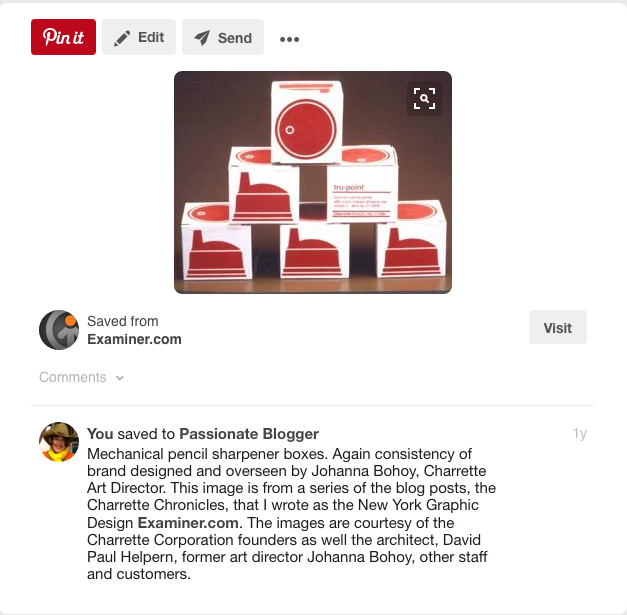
WHEN ‘KNOLLING’ WAS JUST A CHARRETTE CORPORATION LAYOUT AND BRANDING TECHNIQUE
The process of ‘knolling’ existed independent of Knoll and apparently previous to Andrew Kromelow’s coining a phrase for it. It was a prominent style designing with type, graphic design layout, architectural presentation and products branding including overhead or flat lay photography. One company that prominently exemplified this pre-knolling sensibility was the Charrette Corporation. The architect David Paul Helpern, designer of the NYC Charrette Corporation flagship store and the graphic design/branding designer, Johanna Bohoy, the Art Director at Charette’s Headquarters in Woburn, Massachusetts were responsible for its conception. This can be traced back to the early 1980’s rather than the late 1980’s when the term knolling was coined.


There is a series of articles about the Charrette Corporation written by me, the NY Graphic Design Examiner on examiner.com. Many samples of their forward-thinking graphic design and branding style are included. Suffice to say, whether it is called knolling or attributed to the earlier Charrette Corporation methodology, the result is very calming on the brain to observe objects in an orderly rather than chaotic manner. This seems to be especially true for artistic, creative brain dominant people.


To add to this, technology has taken leaps, specifically with the creation of social media venues which facilitates present day knolling. But according to my research, history clearly illustrates that the clean, perpendicular and parallel lined style of graphic design layout, now known as knolling, was not a revolutionary idea and did not begin with Florence Knoll or Andrew Kromelow in 1987. This is not to deny that the advent of social media has allowed knolling to become very practical, even pedestrian in its incarnation as ‘flat lay photography’. Layout and branding are now easily and attractively showcased by Instagram, Pinterest and Tumblr, pictured directly above and below.

CONCLUSION
Life has a way of providing what is needed at a particular time in history. Credit it to The Charrette Corporation, Florence Knoll, Andrew Kromelow or Tom Sachs. They have all played a part in transforming the disciplines of design layout and branding forward to another level of usefulness and appeal in the world of product marketing. But is there more to it than that?!
My next blog post will attempt to answer that question and this one specifically:
Can It Help Organize My Costume Jewelry Collection?

SOURCES AND RESOURCES
KNOLLING Part Two: Can Knolling Help Organize My Vintage Jewelry Collection?
What Is Knolling? The Overhead Photography Trend Explained
Knoll
Florence Knoll
Frank Gehry
Andrew Kromelow
Tom Sachs
Ten Bullets Website aka Tom Sachs Working To Code
Things Organized Neatly
Flat Lay Photography
Charrette Corporation Layout and Branding Technology
Alison Gilbert, NY Graphic Design Examiner
INTRODUCTION
This blog post is based upon my studies of architecture, my observations and understanding of a Cliff May House. Although his Mid Century Modern Rancho style homes were birthed in Southern California[1], this type of house sprouted up in the Denver, Colorado area as well[2]. The following is my reaction essentially to his original Southern California work.

A CLIFF MAY HOUSE
“Once in a blue moon a designer comes along whose work literally manifests the voice of it landscape, its environment and its personality. The homes of Cliff May are exactly what I imagine a Southern California home should look and feel like. They are grand and glorious in their exuberance, capturing the magnificent, warm and sunny weather they share. Yet they are not pretentious or pompous. They do not attempt to mimic anything that came before them. They are exactly as they should be, to me, and are as indigenous as homes in the Los Angeles area could be. BRAVO Clifford May and thank you.”[3]

NEUTRA, SCHINDLER AND FRANK LLOYD WRIGHT


THE ARTS & CRAFTS MOVEMENT
Many other prestigious architects made their imprint on the sunny terrain of Hollywoodland and environs. Most of them did not speak ‘Southern California’ as their primary design vernacular. The work of Richard Neutra[4] and Adolph Schindler[5], emigres from Austria, had an International Style[6] accent. A Frank Lloyd Wright home was always a give away due to its repetitive pattern or modular blocks that sought to create modular building block homes more than focus on its surroundings[7]. As magnificent as the work of the mid-West transplant Greene Brothers was, their Gamble House masterpiece[8] spoke Arts & Crafts movement with a slightly Japanese accent.

CHARLES AND RAY EAMES
Charles and Ray Eames created furniture[9] that spoke the same design language as May’s homes. In fact, their work can be seen in pictures of his houses. But the Eames Style of architecture was stiff and geometric devoid of a vivacious cheer or embrace to the Southern California sun. There are plenty of Spanish, adobe style, grand and simple homes. But they paid tribute to their ancestors[10]. They were not original.

HARRY SEIDLER
Other than May, there is one other architect that comes to mind, Harry Seidler[11], another European emigre. He had a transformational impact on the architecture of his time and place. He spent a brief time teaching and imprinting his mark on the United States. But he ultimately settled in Australia changing Sydney’s landscape forever. I suspect he found a receptive environment that was as compatible with his authentic style as May’s was with Southern California.

CONCLUSION
Architectural design can be a magnificent obsession. The voice of an architect can change over the years. In fact, it is believed that most architects do not even ‘hit their stride’ until their later years. This is what made Zava Hadid so unique [12]. Zava had a volume of outstanding work to her name before her untimely death recently at 65. Although there may be exceptions to the general conclusions of this blog post, I stand firm in my conclusion that Cliff May sought to bring joy and comfort to the living accommodations of the ‘hoi polloi’ rather than the elite as many other architects tend to do. It could be said that May did, with greater aesthetics, for Southern California and Denver, Colorado what Levitt[13] did for Long Island, New York.

SOURCES AND RESOURCES
Documentation of information and photographs are available upon request.
The Musical Boys From Brooklyn
The Brooklyn music boys were the eight young men who comprised The Three Chuckles and Cirino & The Bowties. Some of them had been friends since childhood playing sandlot baseball. Some met in local bowling alleys, a venue of their day for playing live music dates. It wasn’t until Alan Freed, a Cleveland, Ohio based Disc Jockey turned music promoter, came to New York City that a concert style venue became available for these up-and-coming music groups he described as singing, ‘Rock’n’Roll’. [1]

The Three Chuckles originally consisted of Tommy Romano, Russ Gilberto and Phil Benti. When the group started to travel to perform, accordion and keyboard player, Benti dropped out. He preferred to stay home with his wife and children. The very young Teddy Randazzo, a talented accordion player who was 15 at the time, replaced him. Within a year, his singing talent elevated him to lead singer of the group. He was more than 10 years younger than the other members of The Chuckles.[2]

Their first hit, Runaround, happened to be written by Cirino Colacrai. Cirino was Teddy’s childhood friend. Sometimes known as Sereno or Serino, he had such a good voice that he was encouraged to form a group of his own. He created Cirino and The Bowties. The group included Cirino Colacrai (aka Del Serino)(Lead), John Granada, Jimmy Piro and Vince “Diddy” Cipoldo.
Biography of a Hit Song and a Movie Appearance
In their repertoire when touring, The Three Chuckles, sang “Runaround”, the song that Del Serino’s had written. “Runaround” became a huge hit and was eventually purchased by RCA from Serino. RCA then signed Serino as a staff writer for their regent label; here he wrote “Foolishly”. Because Serino sang and performed his demo so well, he was asked to form his own group to sing some of his tunes. Both groups appeared in the Alan Freed movie ‘Rock, Rock, Rock’ in 1956. [3]
https://www.youtube.com/watch?v=au68E7QVWcI
The Bowties were eventually heard by Jack Hook and Teddy Reig of Royal Roost Records, who signed them and changed Serino’s name to “Cirino” and had him record “Rosemarie”. They recorded four singles in 1955-56 for Royal Roost Records. The Bowties had some other successes besides the movie both groups appeared in.They were on the Ed Sullivan and Jack Paar Shows. “In the late 1950s, the Bowties seemed to slowly break up, as they lost their contract to Roost, and Cirino followed other, more songwriting-type, projects. Cirino’s songs were featured in the movies “Jamboree” and “Country Music Holiday” during the late-’50s, such as “Toreador,” “I Don’t Like You No More,” and “Goodbye My Darlin’.” During the 1960s, Cirino continued to write more pop songs, some of them moderate hits”. Cirino also bought a luncheonette in Redhook, Brooklyn which became a local attraction. Cirino’s musical buddies would often stop by to the delight of the neighborhood kids.[4]
In a similar manner, Teddy Randazzo moved on, leaving The Three Chuckles. He went out on his own. Over the years, he became extremely successful. He starred in several other teen idol movies, sang, wrote over 650 songs, and produced as well as arranged his music for other singers who had huge hits from his music. All of this elevated him to a level of professional accomplishment that few people ever experience. He was posthumously inducted into the Songwriters Hall of Fame in 2007. [5]

Totally by happenstance, or was it, on the evening on April 25, 2016 when this blog post was completed, the main Turner Classic Movies entertainment of the evening was the 1956 movie, Rock, Rock, Rock! Write it and they will come . . . .
Sources and Resources
[1] Alan Freed coined the term Rock’n’Roll
[2] The Three Chuckles
[3] Cirino and The Bowties
[4] Cirino Colacrai
[5] Teddy Randazzo was inducted into the Songwriters Hall of Fame in 2007
[6] Mill Creek Musings: Rock, Rock, Rock Blog Post
Currently, I’m all about MUSIC, American Music HIstory from the 1920’s through the 1970’s. That’s because I am offering my talents and skills as Alison D. Gilbert, Music Publicist to crooner, Keith Galliher Jr. Music and his producer, Clarence Collins, former member and founder of Little Anthony & The Imperials. My activities include representing them on their record label, Imperials Plus Records. In addition, I am their #Ace Detective when it comes to solving #MusicMysteryChallenges on Two Paths, The Internet Radio Show.

In addition, I designed and manage their website, Imperials Plus Records as well as a manage the collection of related facebook pages linked to their facebook pages below. They include:
• Keith Galliher Jr. Music
• Clarence Collins, founder and former member of Little Anthony & The Imperials
• Teddy Randazzo, Songwriter, singer and teen Rock ‘n Roll movie idol
• Two Paths, The Internet Radio Show
• Imperials Plus Records
• American Music History Recorded
• Alison D. Gilbert, Music Publicist

The Alison D. Gilbert PURPOSE archived on the Alison D. Gilbert Website:

PASSION
• MEDIA MAVEN
• SOCIAL ISSUES
VOCATION
• RESEARCH AND WRITING
• MUSIC AND MOVIES
PROFESSION
• ART & DESIGN
• FOOD & HEALING
• SOCIAL MEDIA
I have NOT abandoned my interests and activities from my past passions, vocations and professions. ART & DESIGN | FOOD & HEALING | SOCIAL MEDIA & SOCIAL ISSUES are archived on The Alison D. Gilbert Website or PAGES section and updated on their related facebook pages. There are also numerous other social media venues that provide inspirational information, current issue and other developments.

Facebook and other social media venues provide on-going, current information about my areas of interest:

ART & DESIGN
• Art & Design-Intro
• Art & Design-2D
• Art & Design-3D
• Art & DEsign- Crafts and Decorative Design
FOOD & HEALING
• Healthy Food
• Kombucha
• Ginger Ale
• Healing
SOCIAL MEDIA & SOCIAL ISSUES
• Survival
• Social Media
• Social Issues
DAILY MAGAZINE AND OTHER DATA
Follow along at the right hand column for:
• Searching for information on the blog or a specific post
• Subscribe tothe Alison D. Gilbert Blog
• The Alison D. Gilbert Daily Magazine
• Google + pages
Expressions of Creative Passion is a study of five musical artists. I have chosen them not for their ‘fame and fortune’. In fact, I have chosen them because at times in their careers, they had to wrestle with challenges to those most sought after goals. Instead, I chose them because, to me, they embody riches far greater than ‘fame and fortune’. I chose them for their extraordinary embodiments of creative passion.
Three are male and two are female. One was born in the 1910’s, one in the 1930’s and three are alive today. In fact, one only started singing within the last decade. One is in the Rock & Roll Hall of Fame. Another is in the Songwriters Hall of Fame.

PERSEVERANCE
AS EXEMPLIFIED BY
SISTER ROSETTA THARPE
Sister Rosetta has come to be known as the ‘Godmother of Rock ‘n’ Roll. She invented styles of singing and guitar pickin’ that were adopted by later, greater artists who got the credit. She was never inducted into the Rock ‘n’ Roll Hall of Fame despite fervent attempts. She is remembered only by the most erudite of Rock ‘n’ Roll students.

HEART & SOUL
AS EXEMPLIFIED BY CLARENCE COLLINS AND
ARETHA FRANKLIN
Clarence Collins was the founder and a member of ‘Little Anthony & The Imperials’. The guys met and became famous as teenagers from Boys High School in Brooklyn, NY.

TIMELESSNESS
AS EXEMPLIFIED BY TEDDY RANDAZZO
Teddy Randazzo, like Sister Rosetta Tharpe showed musical prowess as a child. He played the accordion so well that even his ‘hard to please’ father agreed he had talent. His songs were big successes with Little Anthony & The Imperials and sung by cross generational stars.

SERENDIPITY
AS EXEMPLIFIED BY KEITH GALLIHER JR. MUSIC
Thanks to Keith Galliher, Jr. Teddy’s music is experiencing a long overdue revival and recognition. It is a great joy and will become so for many people.
Welcome to The ALISON D. GILBERT Blog. This blog serves as both a reflection of past entrepreneurial ventures as well as an exploration and investigation into new ideas, interests and passions. The Alison D. Gilbert Blog post categories focus on the following disciplines:
 • The ALISON D. GILBERT BLOG Exploring ART & DESIGN and MUSIC | FOOD & HEALING JOURNEY | SOCIAL MEDIA MARKETING | RAISING SOCIAL AWARENESS | THE ECONOMY & THE ENVIRONMENT. (Each title below links directly to the blog post category).
 • PASSIONS of ART & DESIGN AND MUSIC
Exploring passions of ART & DESIGN created by me and other 2 and 3 dimensional artist. Passions of American music from the 1930’s to the 1960’s focusing on the multiplicity of indigenous styles of music from those decades.
 • FOOD & HEALING JOURNEY
The joy of FOOD and the journey to HEALING are parallel. Discover HEALTH and HEALING technology with traditional nutrition as well as Eastern and Western healing modalities.
 • SOCIAL MEDIA MARKETING
Social Media Marketing has become the new means of marketing communicating for the creation of brand awareness, products and services offerings and stimulation of return business.
 • RAISING SOCIAL AWARENESS
Raising social awareness of human conditions means having the consciousness to eliminate hunger, poverty, homelessness and establish a sustainable environment.
 • THE ECONOMY & ENVIRONMENT
Man’s use of the earth for material gain impacts both the ecological balance and our survival. Our environment needs to be respected stabilized in order for us to survive.


The Knitchen is a life-size kitchen replica entirely covered in yarn.
See on Scoop.it – Avant-garde Art & Design


The public is being kept in the dark when it comes to the birth defects that Monsanto’s money maker Roundup (Glyphosate) is causing.
Source: covvha.net
Do you think that Monsanto’s Roundup Pesticide could be causing birth defects?
See on Scoop.it – The Food rEvolution

People use 3D printers to create far more than…
Source: ca.finance.yahoo.com
3d-Printing is not just for the design room or the artist’s studio. Advancements are taking place in medicine due to this technology.
See on Scoop.it – Avant-garde Art & Design

People use 3D printers to create far more than…
Source: ca.finance.yahoo.com
3D-Printing is not just for the design industry or the artist’s studio. It is supplying advancements in the medical industry that are saving lives, creating organs and now printing vertebra.